
What is Logistics Software?
Starting a business is a dream come true for many, but seamlessly managing every aspect can turn out to be challenging for some. If you have been running a startup for a while, you would agree with the fact that logistics management is critical for your business. This important element may often take a toll on your resources. A good logistics management software can be your rescue.
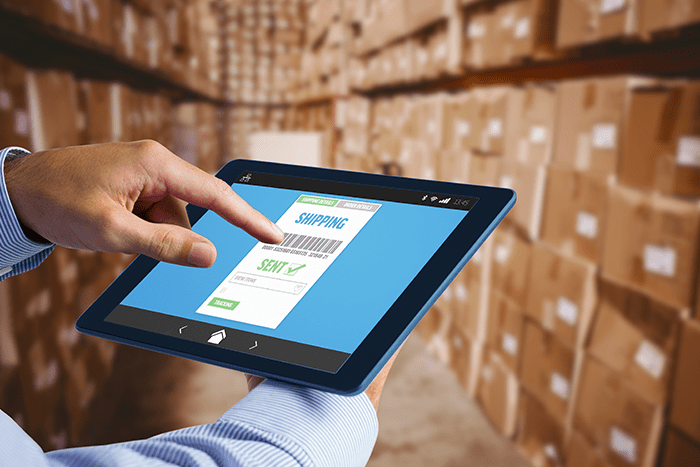
Logistics software, also known as logistics management software (LMS) handles the entire product journey from the point of its creation to the stage where it reaches the final consumer. This journey includes transportation, inventory management, and warehousing. All your manual and time-consuming tasks can now be managed easily using software solutions. These can help small and medium sized businesses (SMBs) in several ways. For example, logistics software can effectively manage product shipping by tracking vehicles, it can help you choose the best routes by optimizing maps, and handle warehouse management. Here are a few other functions that a logistics software can perform for small and medium sized businesses:

- Order Management – Track the status of orders and fulfil them in time, manage their invoicing, handle returned orders, automate repetitive orders, detect errors, etc.
- Inventory Management – Regulate the entire process of ordering, stocking, and utilizing products to ensure regular access to the required quantities of the right product at the right time at the right location.
- Warehouse Management – Coordinate inventory and sales by improving shipping, accurately fulfilling orders, making full use of the available space for storage, and efficiently managing laborers.
- Transportation Management – Shipping goods in an economical way using time-efficient routes and the best-suited delivery methods.
- Forecasting - Predict the demand for products using historical data, plan resources and procurement accordingly to reduce costs and avoid unnecessary hoarding.
Benefits of Using Logistics Software for SMB Start-ups
Whether your small or medium sized business involves inbound logistics (moving goods from suppliers to warehouses) or outbound logistics (storing, transporting, and supplying products to customers), a logistics optimization software can easily improve product production, sourcing, packaging, and distribution. Here are some of the benefits that a logistics management software may provide to small or medium sized business owners:
- Faster Product Delivery – 63% of customers want their product delivery within 3 days from placing an order. Thus, ensuring faster product delivery has always been a focal point for businesses. Using a logistics software may give you greater control over the product management process. It may help you efficiently manage all the factors that affect the time taken for your product to reach customers and boost your workflow speed reducing shipping delays.
- Minimized Human Errors by Automating Functions – Logistics management involves handling many repetitive processes. These processes, when completed manually, consume a lot of time, lead to errors, and a poor delivery experience. Considering 84% of customers do not prefer buying goods from a seller after a poor delivery experience, investing in a reliable logistics management software may be a smart move. These software solutions minimize the scope for human errors by automating repetitive functions, thereby ensuring top-notch order fulfilment.
- Refined Transportation – Tracking vehicles and analyzing huge amounts of transportation data without the required technology support can lead to major blunders because of mismanagement. These mishaps not only waste time and resources but also impact the survival of your business. Having a transportation logistics software can allow you to analyze data in real-time helping you to take relevant decisions. These decisions based on insights ensure a product reaches the end-user without any damages using the best routes.
- Increased Visibility into Logistic Processes – Logistics management involves coordinating a series of interlinked processes. Using a logistics software helps you to manage individual processes more ably and have the real-time status of workflows. When you have a complete understanding of the internal workflow, it prepares the way for order fulfillment.
- Improved Customer Services – 62% of customers consider shipping rates to be the final determinant when ordering products. Using a logistics software helps give you better control over the order shipment process and product delivery enabling timely deliveries of products at reduced shipping rates. This in turn may improve the customer experience largely.
How to Select the Right Logistics Software for SMBs?
As mentioned above, using a logistics management software may considerably simplify the process and reduce the efforts required on your part. However, before introducing a logistics management system software in your business you need to select the most suitable one. Here are few aspects that you can consider before picking one:

- Identify Business Needs – The first step for every small or medium sized start-up is to understand their business needs so that they can set attainable goals, heading in the right direction for achieving them. To ensure that the chosen logistics software can fulfill your shipping needs, you should know:
- Your customers’ demography (age, gender, social and economic background, etc.);
- Features of the products that you are offering;
- Transportation methods that meet your requirements in terms of investment, time taken for delivery, reliability, safety standards, etc.; and
- Expectations of your customers regarding the product delivery.
- Evaluate Costs – Budget plays a major role for SMB start-ups when they decide to digitize their business processes. Similarly, when you want to pick the suitable logistics software for your business, carefully understand your budget limitations and choose the one that offers good value for money.
- Analyze the Features of Logistics Software – Your business needs might be unique but here are a few services that a logistics software should always offer:
- Ability to forecast the customers’ demands, market trends, and inventory tracking for efficient inventory management.
- User-friendly interface to easily navigate around the major functions.
- Multi-client compatibility to serve multiple customers with different orders.
- Ability to answer customers’ queries and provide real-time status of products.
- Easy customization for flexibility.
Logistics Software for SMBs in India
There are multiple logistics software options available for your business. Selecting a logistics software that ensures efficiency and speed, alone can become the differentiating factor bringing you a competitive advantage. So invest in one now to help your business reach newer heights.
Disclaimer: This blog is provided on a best-effort basis and suggests ways to enhance your business, and there is no assurance as to its accuracy, completeness or usefulness or that such information is error-free. Amazon hereby disclaims any and all liability and assumes no responsibility whatsoever for consequences resulting from use of such information. You may decide to either accept or reject these suggestions in your sole discretion. Implementation of these suggestions may be subject to applicable laws. Please contact your consultants to understand your obligations and compliance under the applicable laws. You expressly waive any and all claims, rights of action and/or remedies (under law or otherwise) that you may have against Amazon and/or its affiliates arising out of or in connection with the use of or reliance upon such information.
Disclaimer: Whilst Amazon Seller Services Private Limited ("Amazon") has used reasonable endeavours in compiling the information provided, Amazon provides no assurance as to its accuracy, completeness or usefulness or that such information is error-free. In certain cases, the blog is provided by a third-party seller and is made available on an "as-is" basis. Amazon hereby disclaims any and all liability and assumes no responsibility whatsoever for consequences resulting from use of such information. Information provided may be changed or updated at any time, without any prior notice. You agree to use the information, at your own risk and expressly waive any and all claims, rights of action and/or remedies (under law or otherwise) that you may have against Amazon arising out of or in connection with the use of such information. Any copying, redistribution or republication of the information, or any portion thereof, without prior written consent of Amazon is strictly prohibited.
Small Business Resources
Signup for our newsletter and get notified when we publish new articles for free directly into your inbox.
Browse Bizzopedia by Category
Get the latest updates on all things business
Share you information to subscribe and get updates on business guides, trends, tips
Share the knowledge of Bizzopedia


Article Categories
Amazon Programs for SMBs
